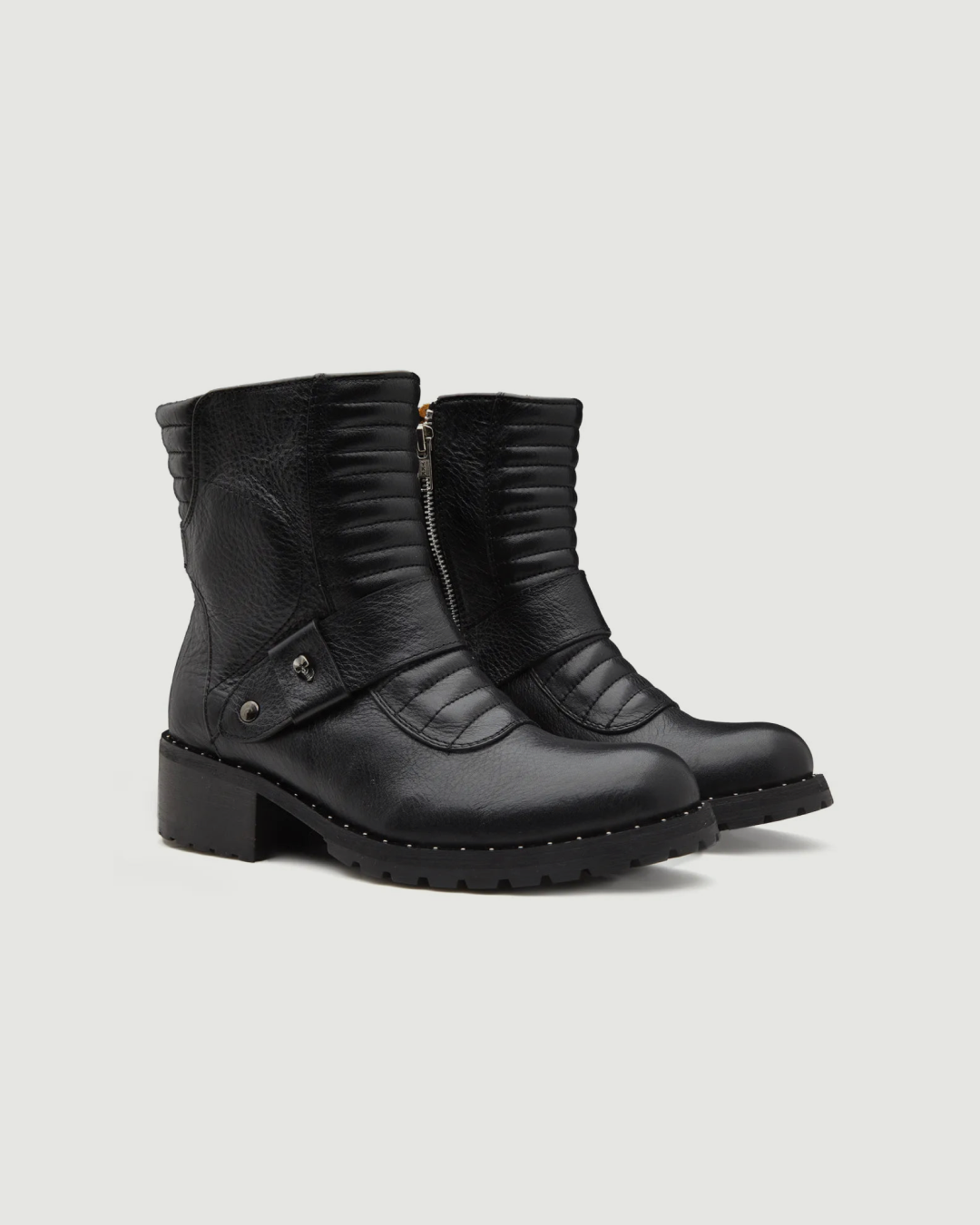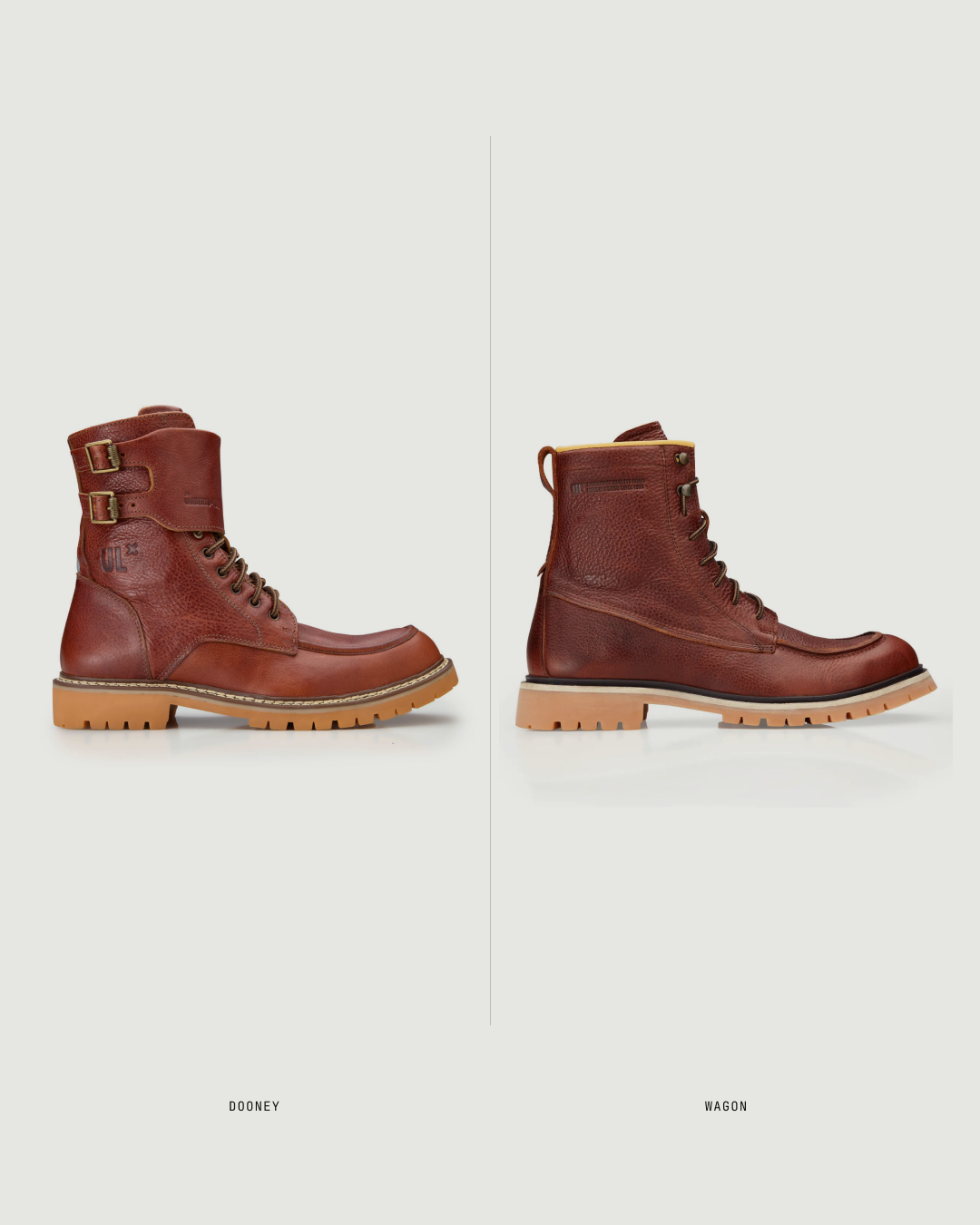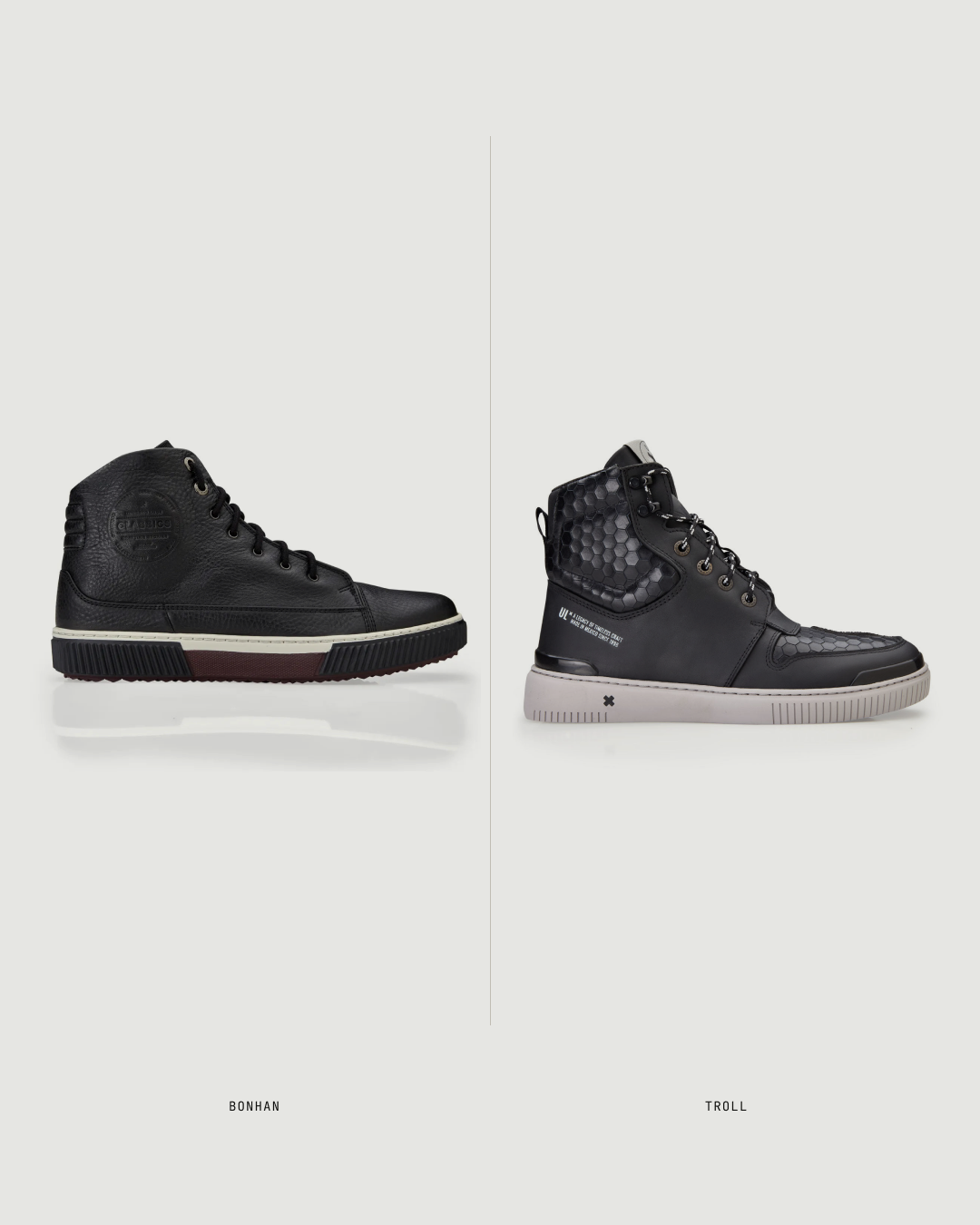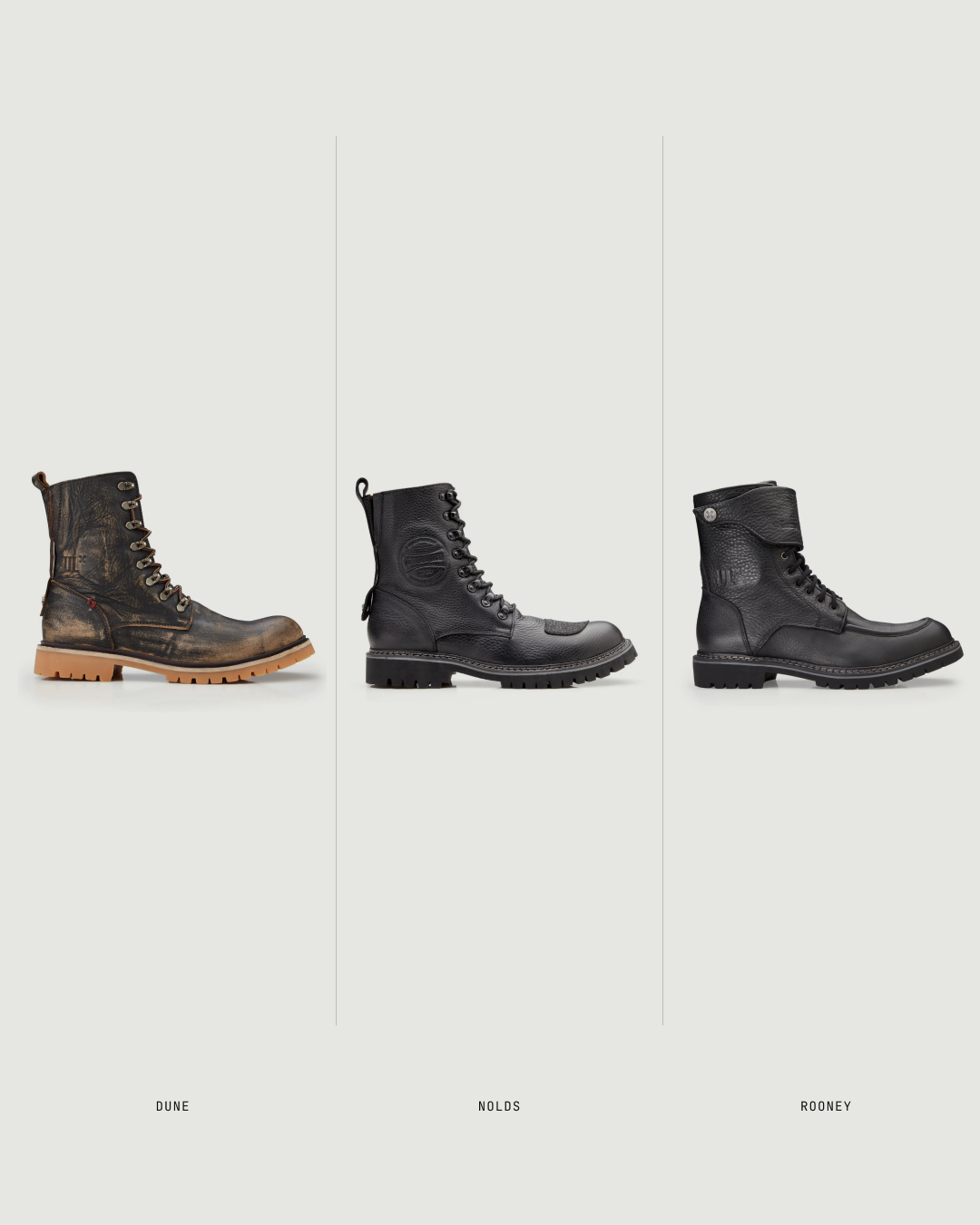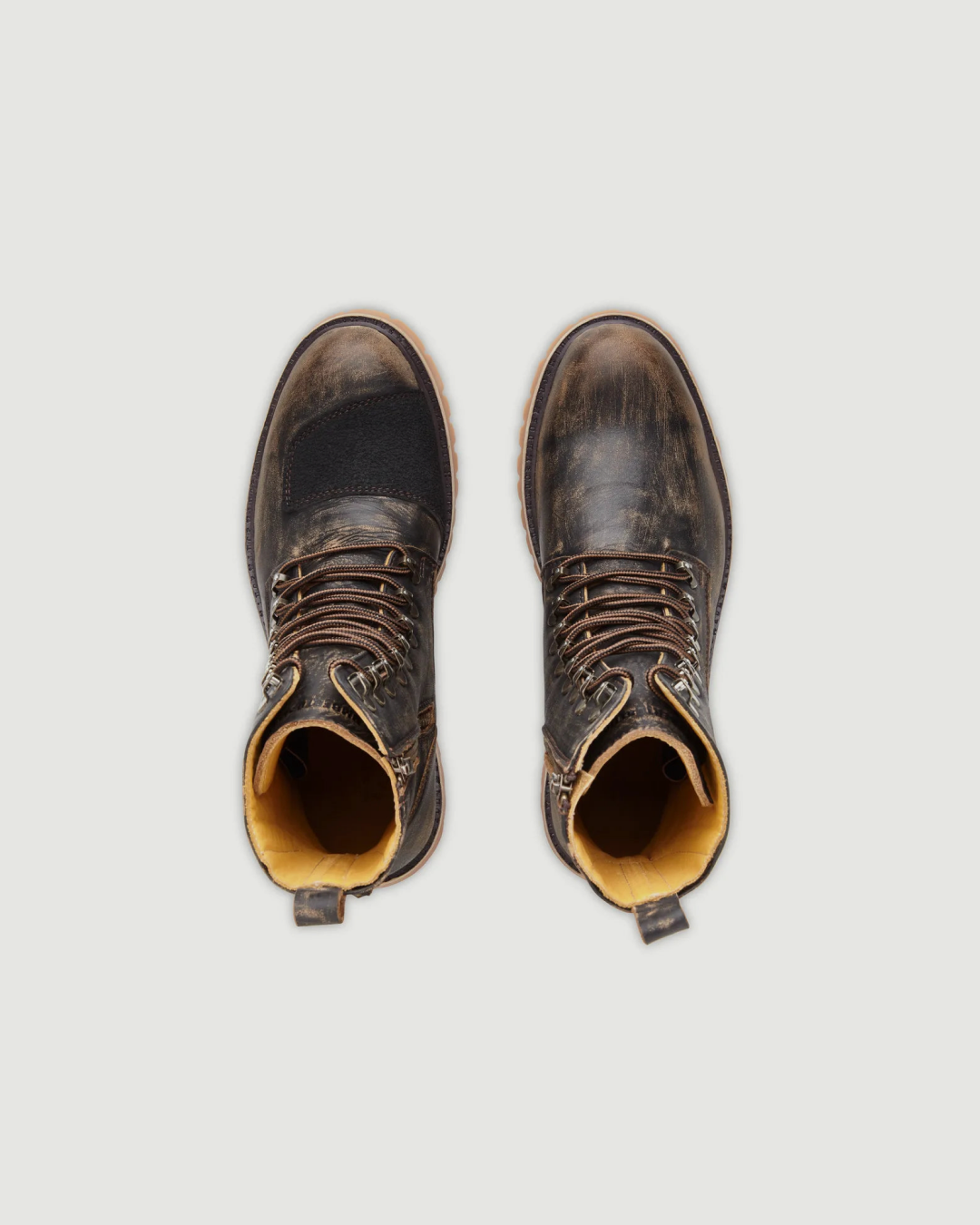
Cowhide in footwear is not a perfectly uniform surface: it can show grain, subtle variations and shifts in tone that are part of the material. With wear, creases appear at the flex points along with a patina tied to movement, dust, moisture and the care each pair receives.
What it means for footwear to be made of cowhide
The spec sheet should state the material of the upper. In the models mentioned here — Nolds, Bonhan Classics and Wagon — Umberto Luce declares cowhide. That describes the outer material, but it does not make the three pairs identical: colour, finish, silhouette, lining, sole and construction all change the experience.
Visible grain should not automatically be mistaken for a defect. Genuine leather keeps traces of its origin and responds to wear. What matters is telling a natural variation apart from a manufacturing fault; if you see delamination, a broken seam or anything abnormal, document it and contact support.
How leather changes with wear
- Creases: they appear where the foot flexes. Their shape depends on your movement and the fit.
- Patina: the finish can gain depth or contrast over time.
- Marks: contact with the bike and the environment leaves different traces on every pair.
- Adaptation: the material can settle around the volume of your foot, but it does not correct the wrong size.
There is no universal mileage figure that predicts these changes. Climate, how often you wear the pair, how you ride, how you walk and how you care for it all produce different results.
Leather, hide and finish: terms worth separating
In everyday use, "leather" and "hide" usually refer to the same animal-origin material. The finish is the visible treatment of its surface: it can change colour, sheen and feel without changing the material's main category. To compare products, go by the exact wording of each spec sheet and avoid inferring properties such as waterproofing, thickness or specific resistance if they are not declared.
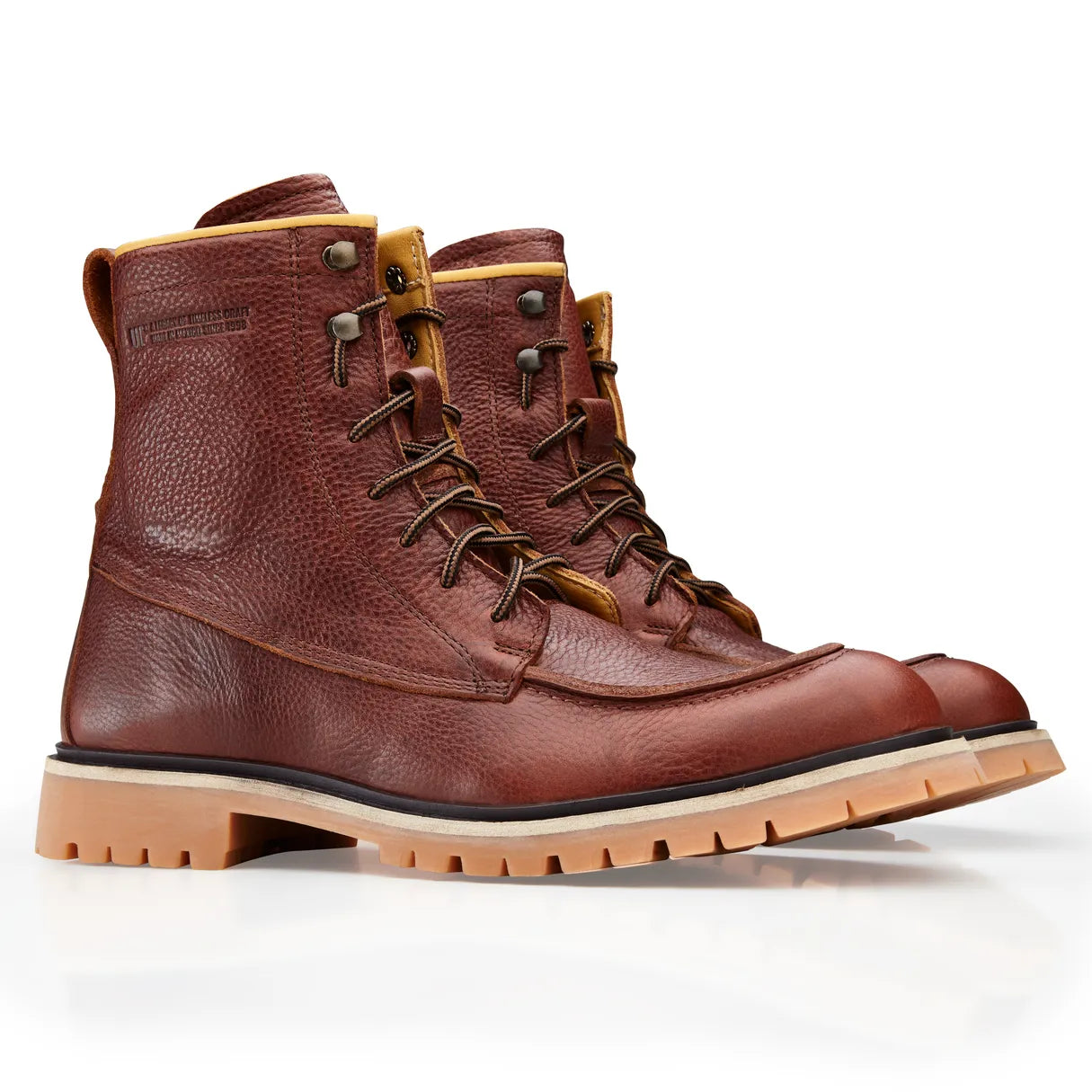
Colour also changes how the evolution reads. In black, dust and certain light scuffs can become visible; in brown, shifts in tone and patina tend to stand out more. Neither is inherently "better": choose according to the character you want to keep and the maintenance you are willing to do.
What leather contributes inside motorcycle footwear
The outer material is only one part of the system. In a pair built for riding you also have to check the coverage, the sole, the closure and the components declared on the spec sheet. Leather does not replace specific protection, and on its own it does not turn any boot into motorcycle gear.
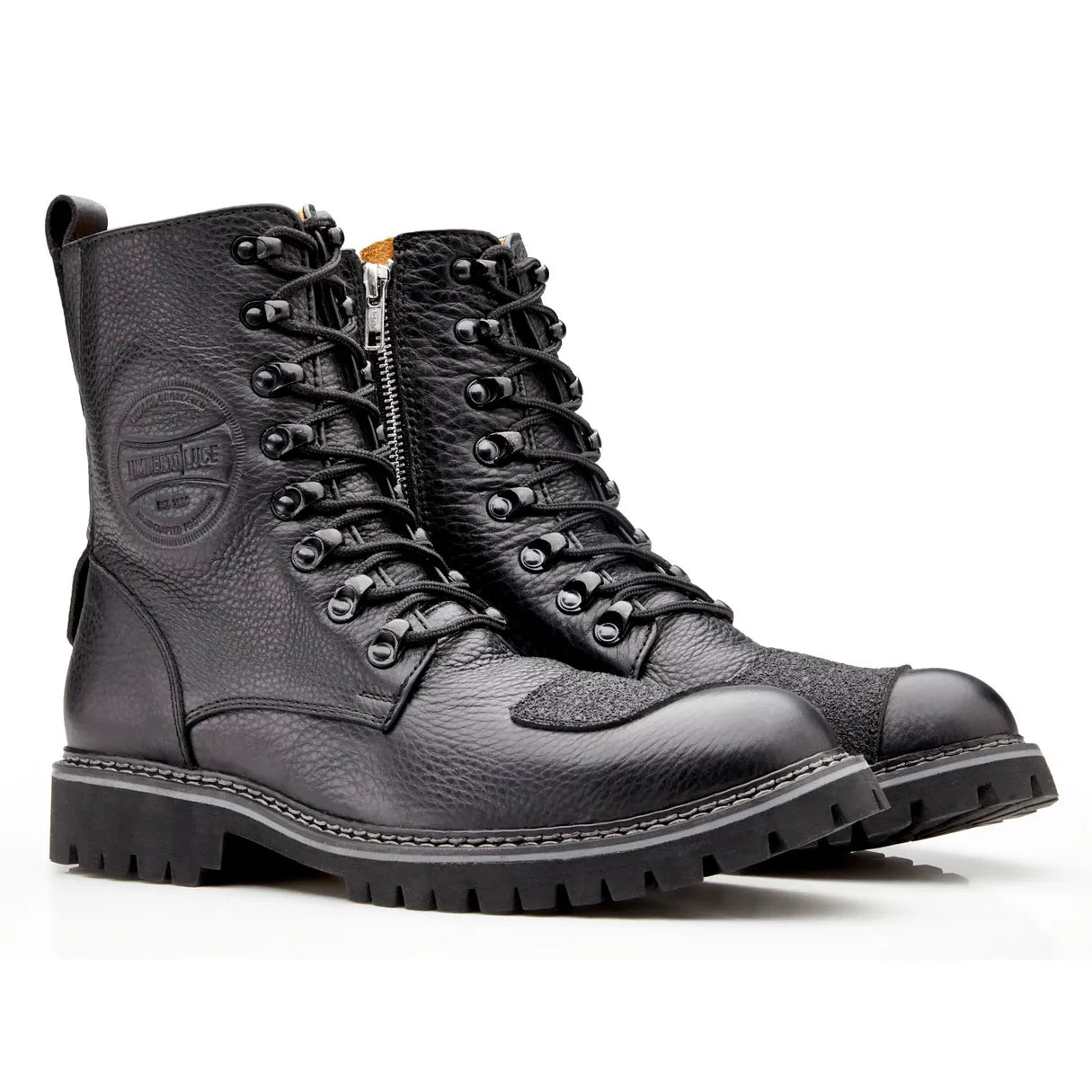
So it pays to read the whole product. Nolds and Wagon belong to the Rider+ line and declare D3O ankle protection, Tecnodeal Premium reinforcements at the toe and heel, Lockstitcher construction and a natural rubber sole. Bonhan Classics is a Rider cowhide sneaker with a low silhouette and a TR polymer sole. These specifications are there to compare construction; they do not eliminate the risk of riding.
Three ways to wear cowhide
Nolds: a black boot with practical entry
Nolds combines black leather, laces and a side zip. The declared gear-lever guard adds a contact area designed for shifting.
Wagon: a brown boot with a classic silhouette
Wagon uses full-grain cowhide in brown, a leather lining and Kevlar laces according to its current spec sheet.
Bonhan Classics: leather in a Rider sneaker format
Bonhan Classics brings cowhide to a low silhouette. It suits anyone looking for a transition between the bike and everyday wear, once you have weighed up the level of coverage you need.
Basic care
Remove dust with a brush or a soft cloth, let the pair dry at room temperature if it gets damp, and keep it away from direct heat sources. Before applying any product, confirm it is compatible with the finish and test it on a less visible area. Do not use a one-size-fits-all recipe if you do not know the pair's finish.
What to check when a leather pair arrives
Look at both shoes in natural light and check the seams, the join with the sole, the accessories and the finish. Compare them as a set, rather than looking for artificial symmetry in the grain. Then test the fit indoors. If you notice a difference that looks structural rather than a natural variation, document the condition before applying any product and get in touch with support.
Frequently asked questions
Should two leather pairs look identical?
No. There can be natural variations of grain and tone within manufacturing parameters.
Is leather waterproof?
Do not assume so. A spec sheet declaring leather is not a waterproofing certification.
Do creases mean poor quality?
Not on their own. They are a normal part of flexing; a structural fault has to be assessed separately.
Learn what makes footwear built for riding different and compare the current models in motorcycle footwear.