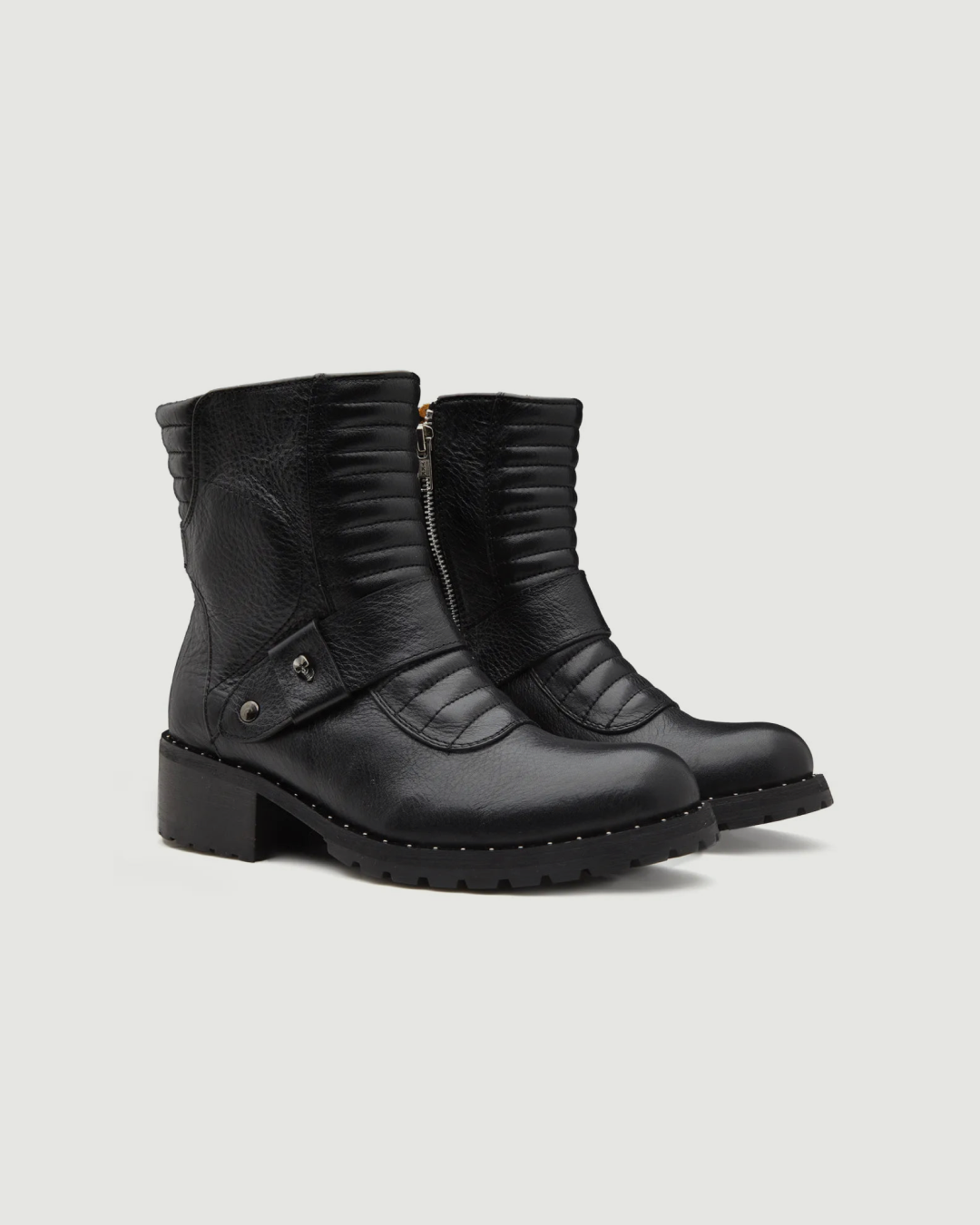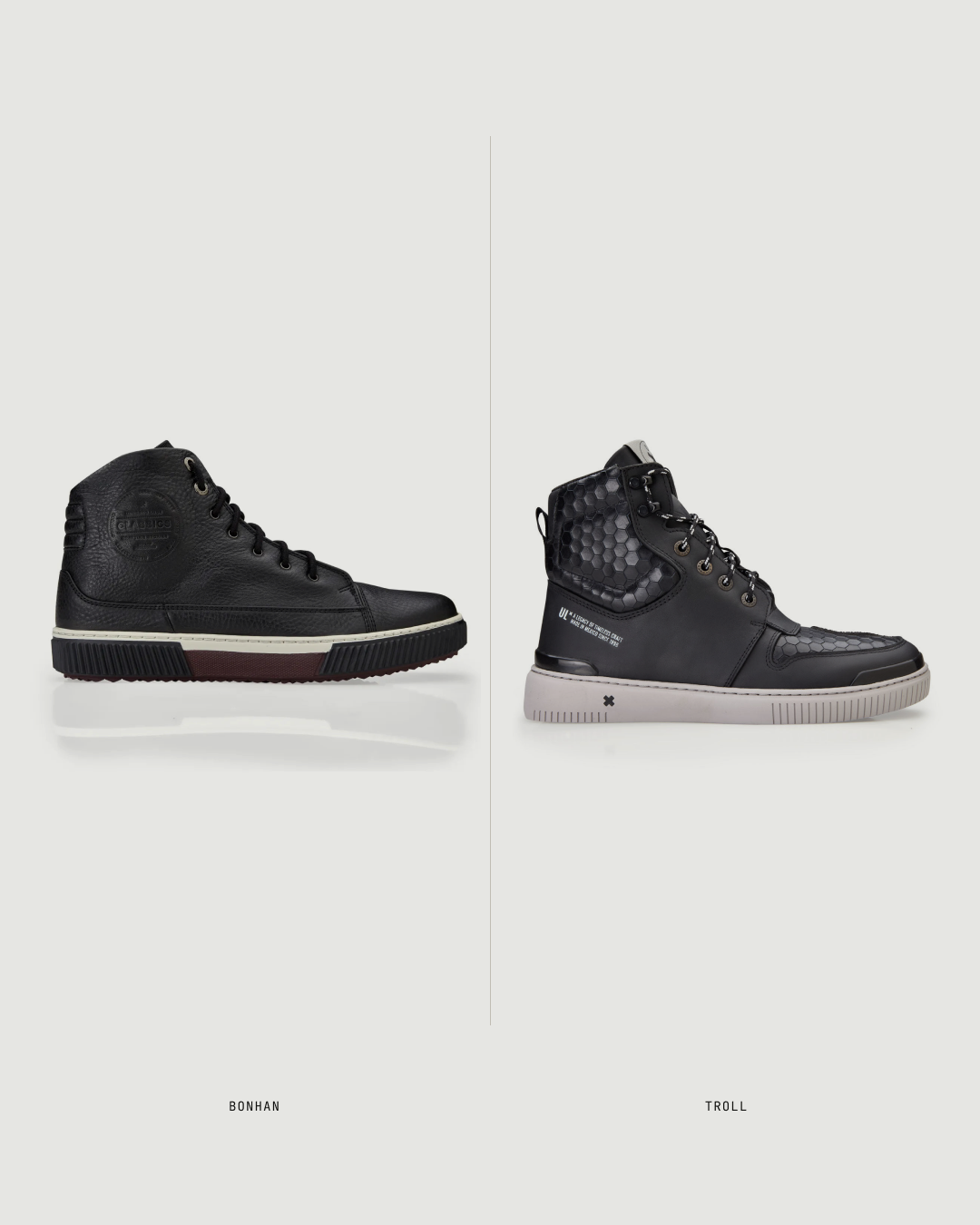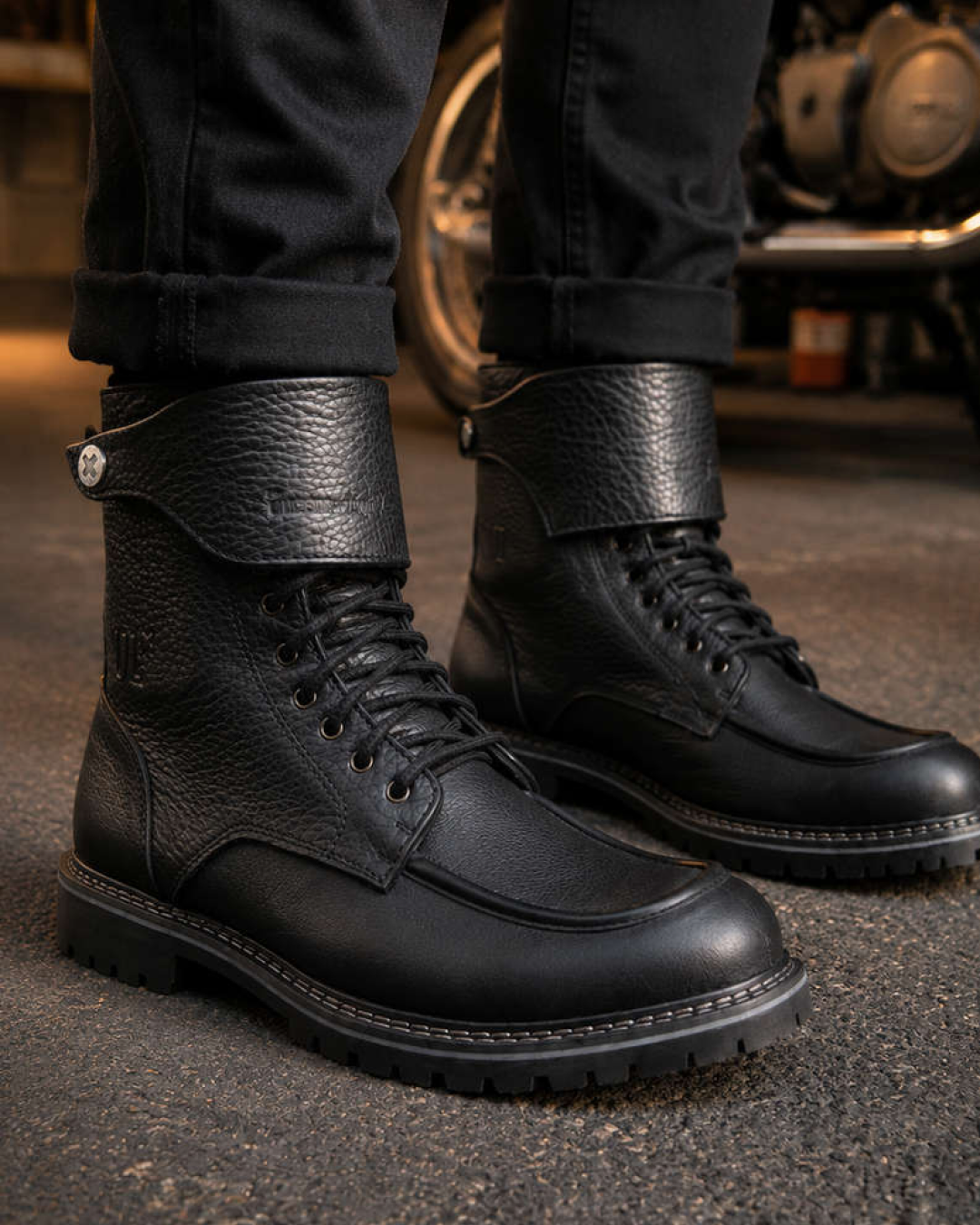
A leather pair does not stay visually still. The creases, the sheen, the tone and the marks tell you how it flexes, where it makes contact and what care it receives.
What you should check
- Creases appear in the areas that move
- The patina depends on the finish and on wear
- The fit changes where the material flexes
- Dust, moisture and sun each speed up different changes
- Two pairs of the same model do not evolve identically
Why it matters in real use
Footwear works as a whole: size, last, upper, closure, sole and components all interact. A single isolated feature is not enough to declare that a model will be the best for every person or every route.
The materials, components and constructions cited here correspond to the technical information published by Umberto Luce. Price, promotions and stock can change by size and should be checked at the time of purchase.


How to apply it step by step
- Photograph the pair when new, in natural light, as a reference.
- Record the context of wear instead of attributing everything to mileage.
- Clean and dry according to the finish, not a one-size-fits-all recipe.
- Contact support if you see a structural fault rather than a surface mark.
How to look at the material without inventing conclusions
Leather can show variations of grain, tone and flex. Look at it in natural light and compare the pair as a whole. A surface mark, a crease from wear and a structural fault are different phenomena; they should not be judged by the same rule.
Before cleaning, work out whether you are dealing with dry dust, moisture, grease or an alteration of the finish. Applying a product without a diagnosis can set a stain or change the colour. Document it first and test any treatment on a discreet area.
Keeping a care record
Noting the date, the context of use and the product applied helps you understand how the pair evolves. If you are going to share mileage or experience, include the weather and how often you wear it; an isolated figure proves nothing about durability and does not let you compare two users.
Brown and black do not age the same way visually
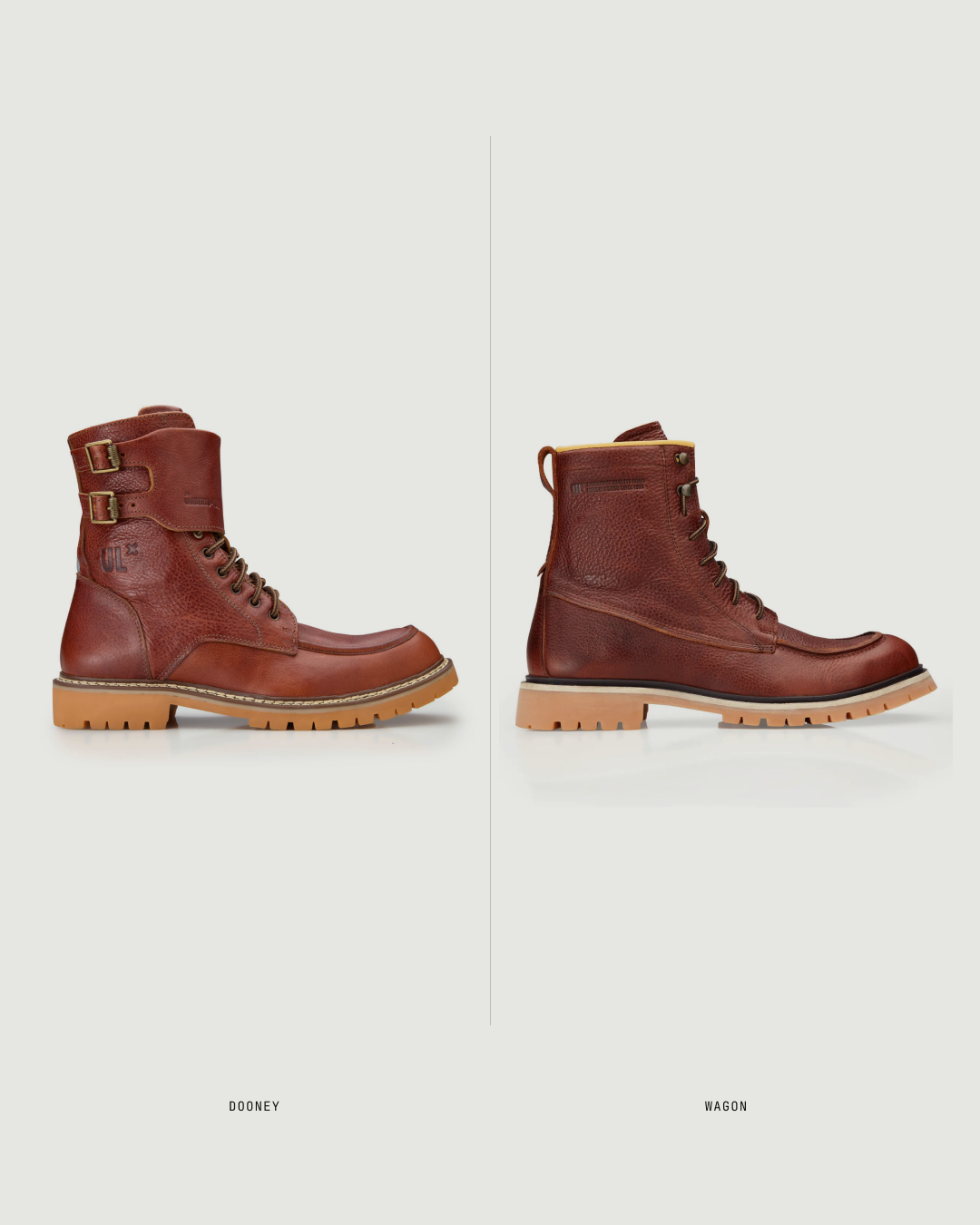
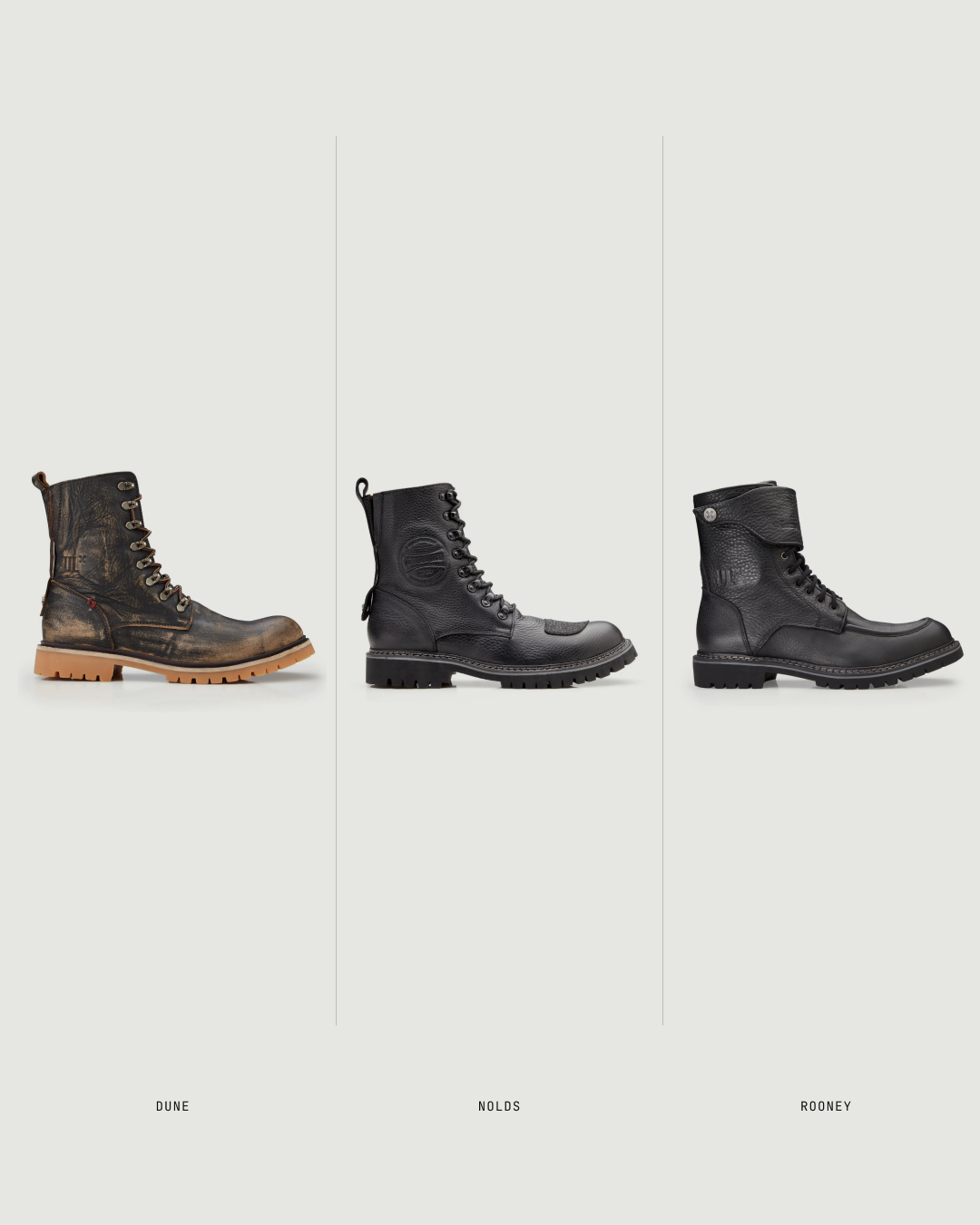
On a brown boot like Wagon, shifts in tone and patina can become visible sooner because there is more contrast between highlights, creases and areas of friction. On Nolds, black tends to disguise part of those variations, although light dust and rubbing from the gear lever can stand out. None of those changes, on its own, proves a fault.
A normal crease or a sign to look into
| Observation | Initial reading |
|---|---|
| Symmetrical creases near the toes | The usual flex of the foot and the upper |
| A gradual change of sheen | Patina associated with contact, cleaning and wear |
| Localised wear over the gear lever | Repeated contact; check the guard and your position |
| A seam opening or the sole separating | This is not patina: document it and request a review |
The best comparison is against photographs of the same pair when it was new. Include both profiles, the toe, the heel and the sole to tell cosmetic evolution apart from a structural change.
Mistakes worth avoiding
- Choosing on appearance or a promotion alone.
- Copying your size from another brand without measuring.
- Turning a material or component into an absolute guarantee.
- Ignoring your riding and the time you spend walking.
- Wearing the pair outside before confirming the fit.
Related reading
Frequently asked questions
Are creases a defect?
Not on their own; they are normal where the foot flexes.
Does brown leather change more?
The contrasts can be more visible, but the evolution depends on the finish and on wear.
How many miles will it last?
There is no responsible figure without knowing the use, the maintenance and the conditions.
Explore Umberto Luce motorcycle footwear and compare the models explained in this guide directly.