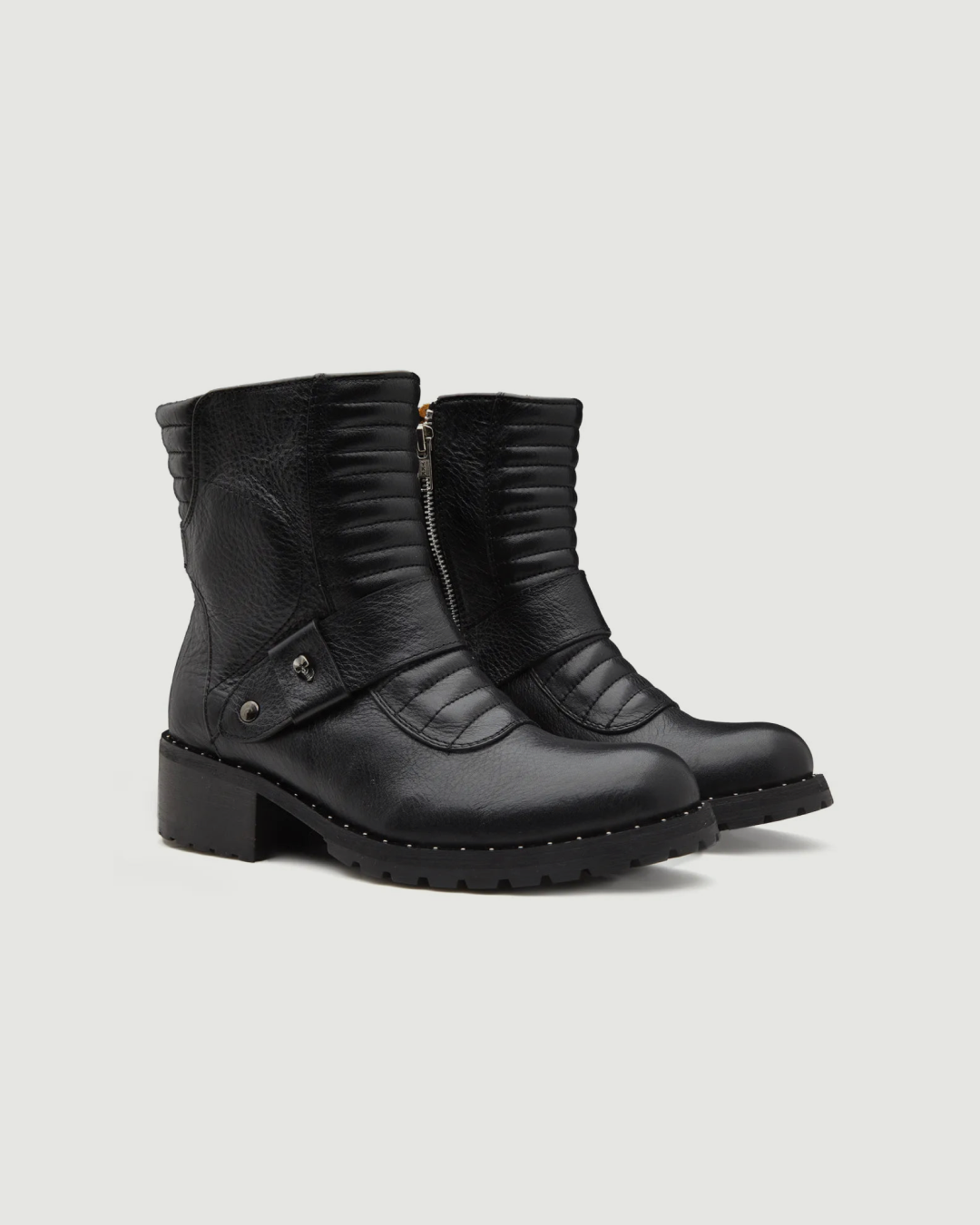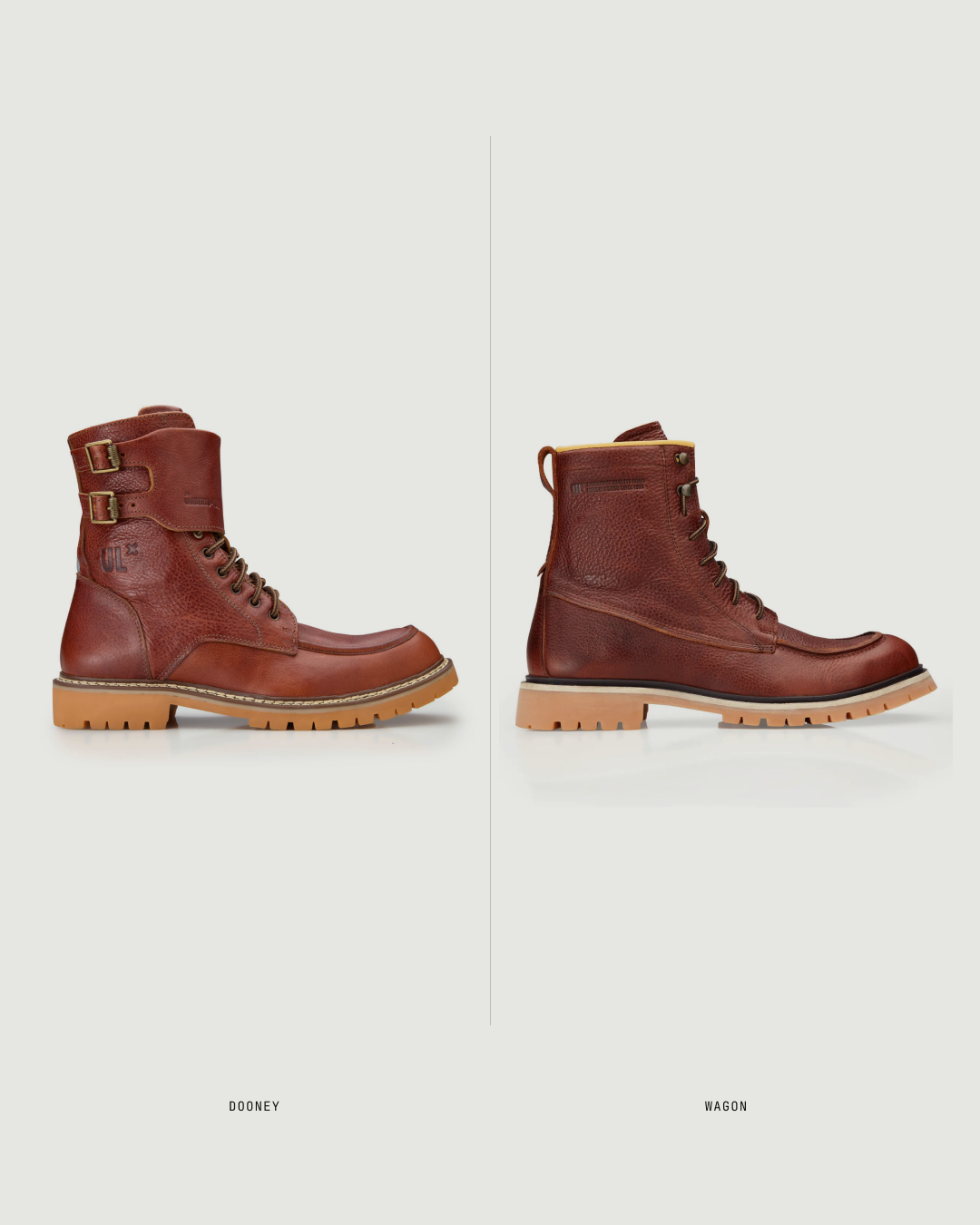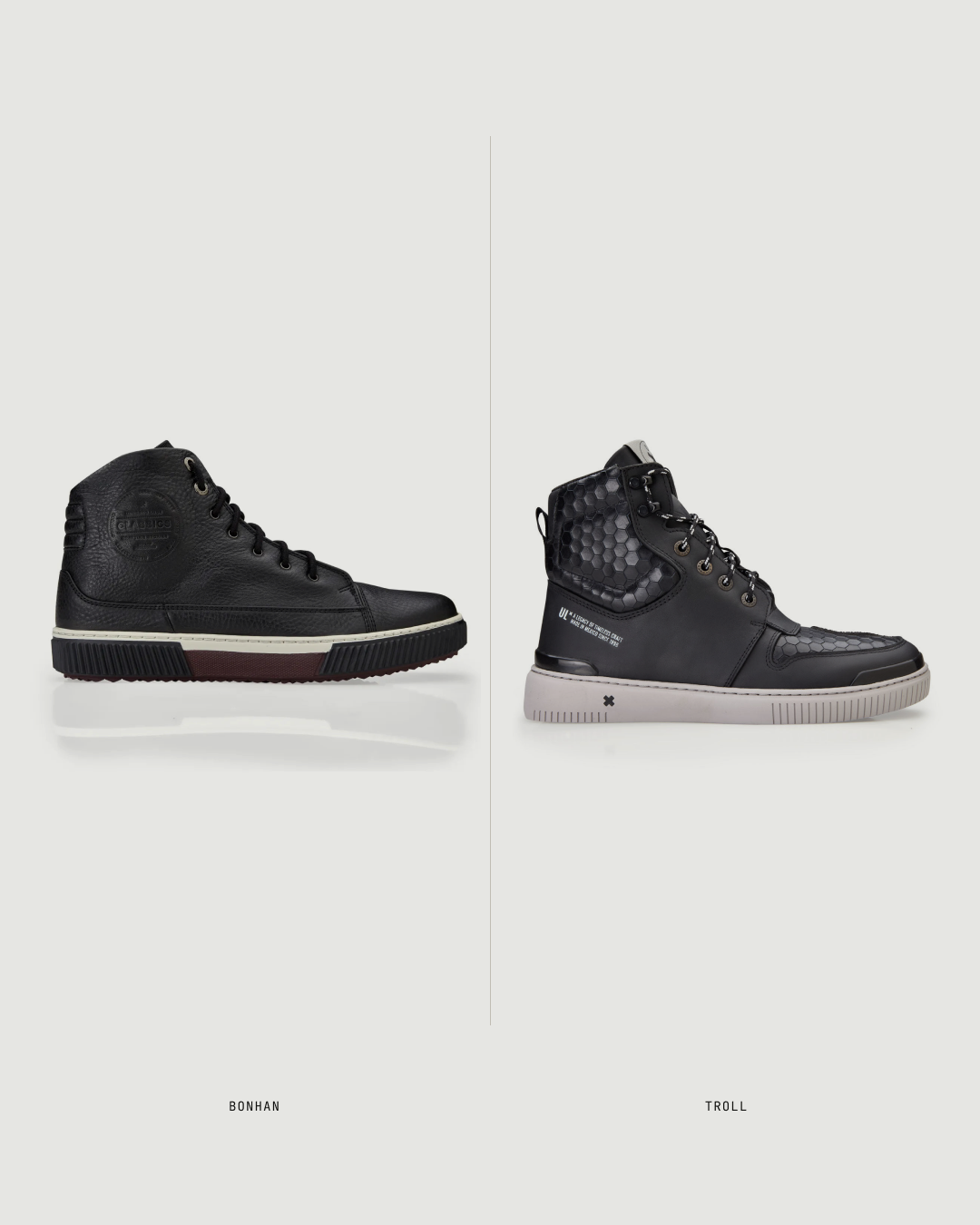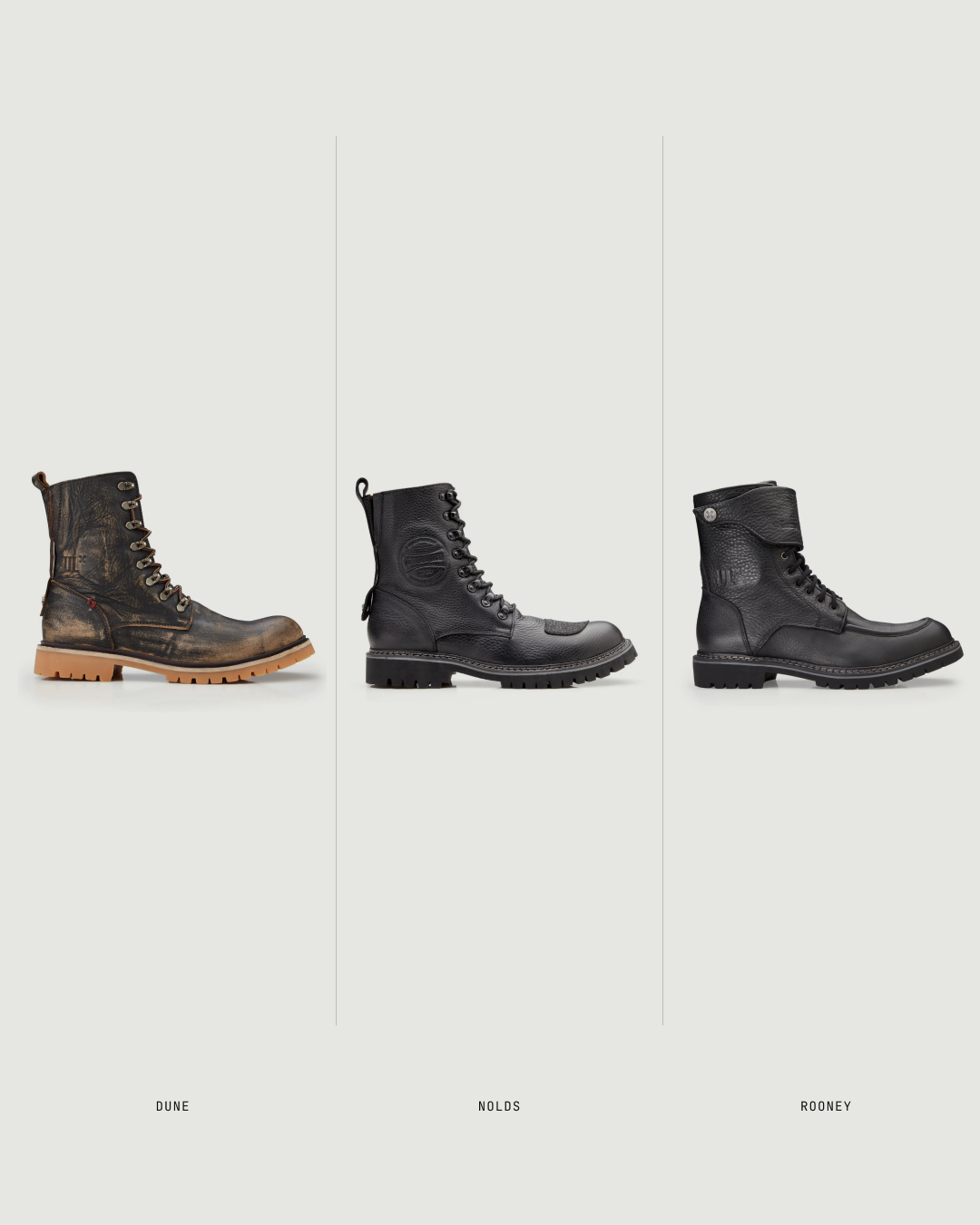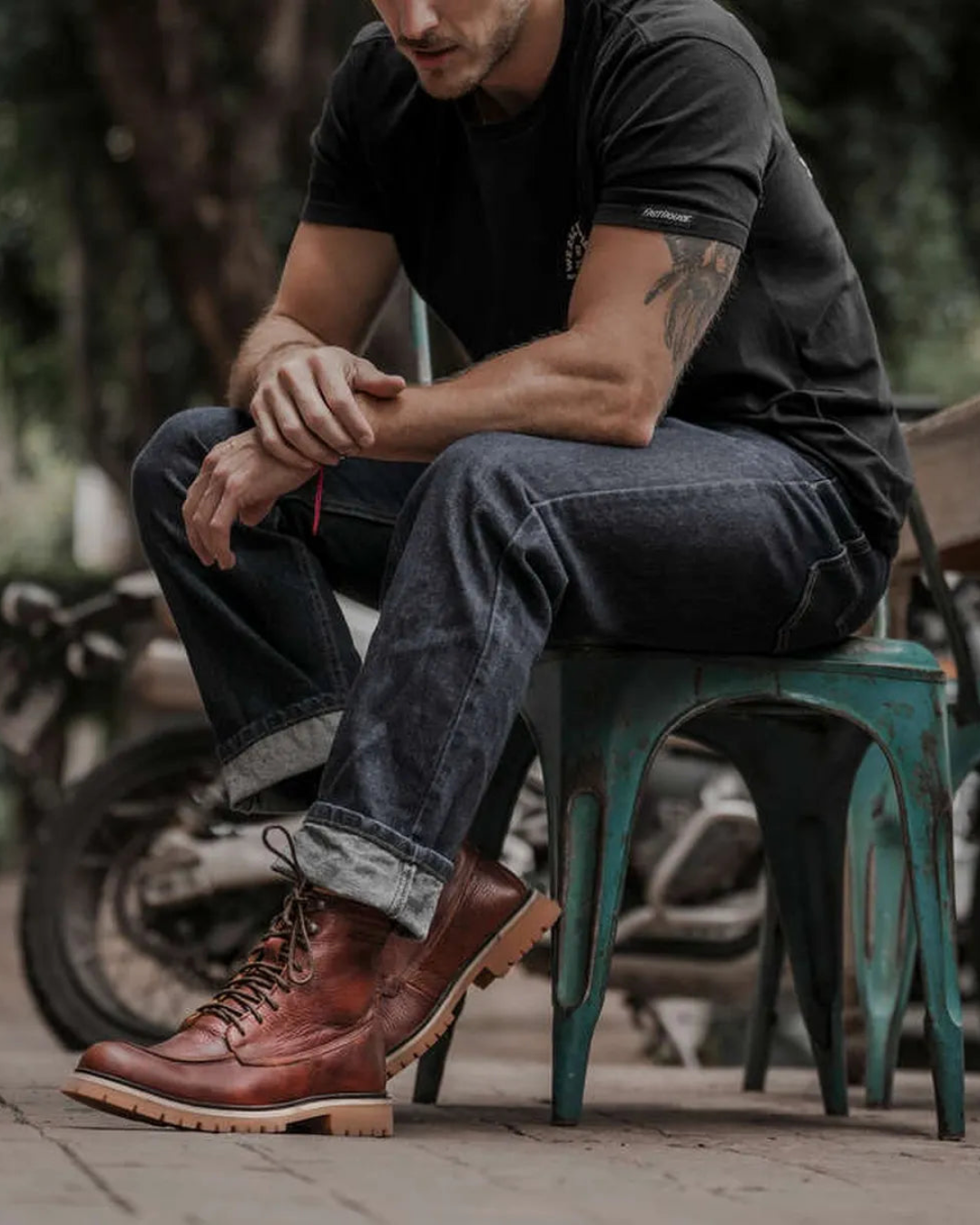
If your leather boots get wet, remove the surface moisture, open the footwear up and let it dry slowly at room temperature. Do not use a tumble dryer, a heater or direct sunlight.
What you should check
- Take the laces out and open the closures to help ventilation
- Blot dry with a cloth; do not rub hard
- Pack lightly with clean paper and change it as it dampens
- Keep the pair away from direct heat
- Wait until it is completely dry before conditioning
Why it matters in real use
Footwear works as a whole: size, last, upper, closure, sole and components all interact. A single isolated feature is not enough to declare that a model will be the best for every person or every route.
The materials, components and constructions cited here correspond to the technical information published by Umberto Luce. Price, promotions and stock can change by size and should be checked at the time of purchase.

How to apply it step by step
- Act soon, without applying products to soaked leather.
- Leave each boot in a natural position with air around it.
- Watch for changes of shape, odour, stains or separation as it dries.
- If the damage looks structural, document it and contact support.
How to look at the material without inventing conclusions
Leather can show variations of grain, tone and flex. Look at it in natural light and compare the pair as a whole. A surface mark, a crease from wear and a structural fault are different phenomena; they should not be judged by the same rule.
Before cleaning, work out whether you are dealing with dry dust, moisture, grease or an alteration of the finish. Applying a product without a diagnosis can set a stain or change the colour. Document it first and test any treatment on a discreet area.
Keeping a care record
Noting the date, the context of use and the product applied helps you understand how the pair evolves. If you are going to share mileage or experience, include the weather and how often you wear it; an isolated figure proves nothing about durability and does not let you compare two users.
What changes if the boot has a leather lining
Wagon combines a leather upper and lining. If it gets wet, drying the outside is not enough: open the Kevlar laces wide, remove the insole only if it comes out without forcing it, and let air circulate inside. The paper should sit loose; packed tight it can deform the boot and block ventilation.
A recovery sequence
| When | Action |
|---|---|
| On arrival | Blot off surface water, clean loose dirt and open the footwear up |
| While drying | Change the damp paper and leave space around each boot |
| When it seems dry | Check the lining, insole, seams and the area between upper and sole too |
| Afterwards | If the leather has dried out, use a compatible conditioner on a discreet area |
Neither Wagon nor leather boots in general should be treated as waterproof unless there is a specific declaration. Soaking leather repeatedly and compensating with heat speeds up deterioration.
Mistakes worth avoiding
- Choosing on appearance or a promotion alone.
- Copying your size from another brand without measuring.
- Turning a material or component into an absolute guarantee.
- Ignoring your riding and the time you spend walking.
- Wearing the pair outside before confirming the fit.
Related reading
Frequently asked questions
Is leather waterproof?
Do not assume so; a product being leather is not a waterproofing certification.
How long does it take to dry?
It depends on how much water it absorbed, the ventilation and the weather. Do not speed it up with heat.
When do I apply conditioner?
Only when it is dry, and after confirming it is compatible with the finish.
Explore Umberto Luce motorcycle footwear and compare the models explained in this guide directly.